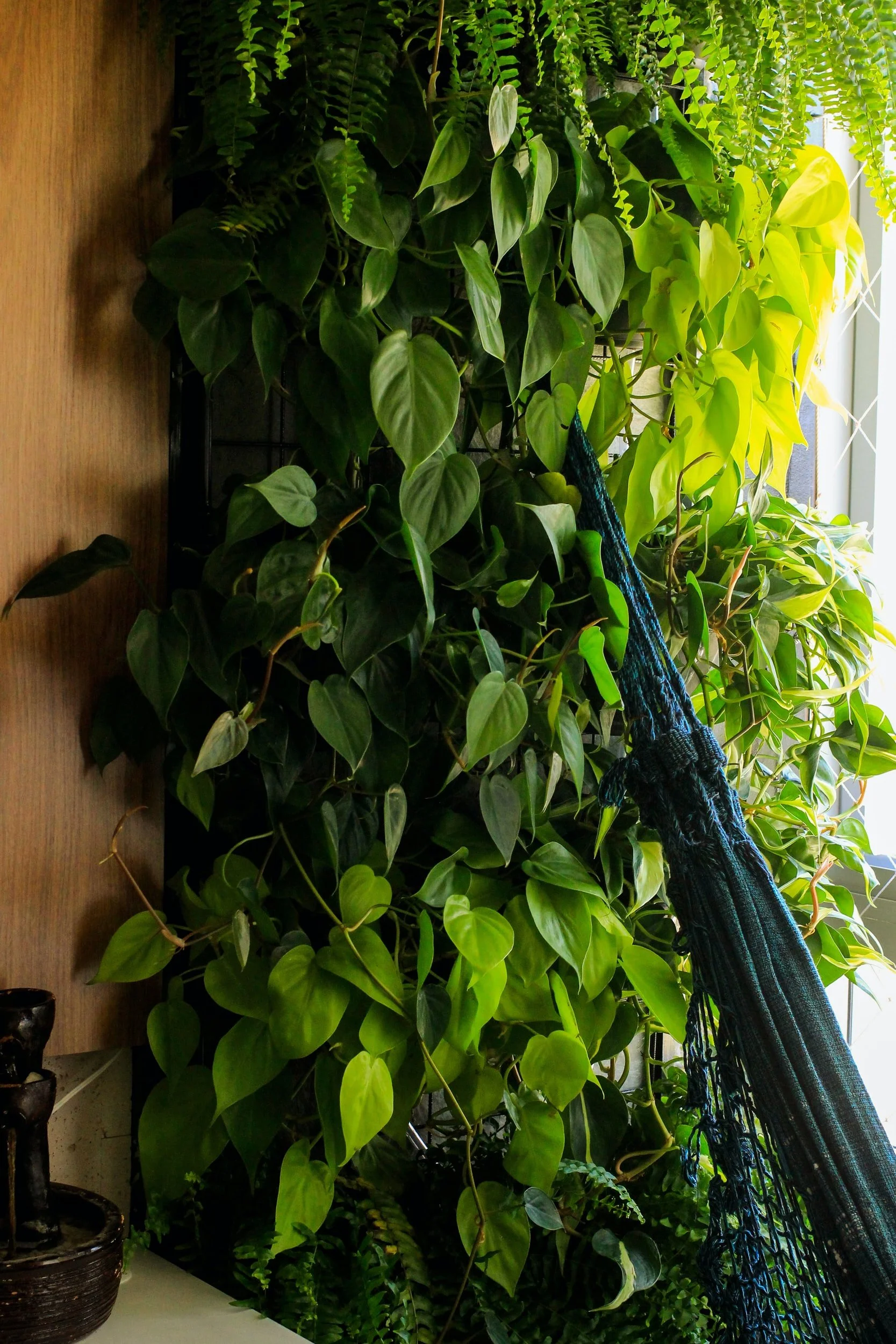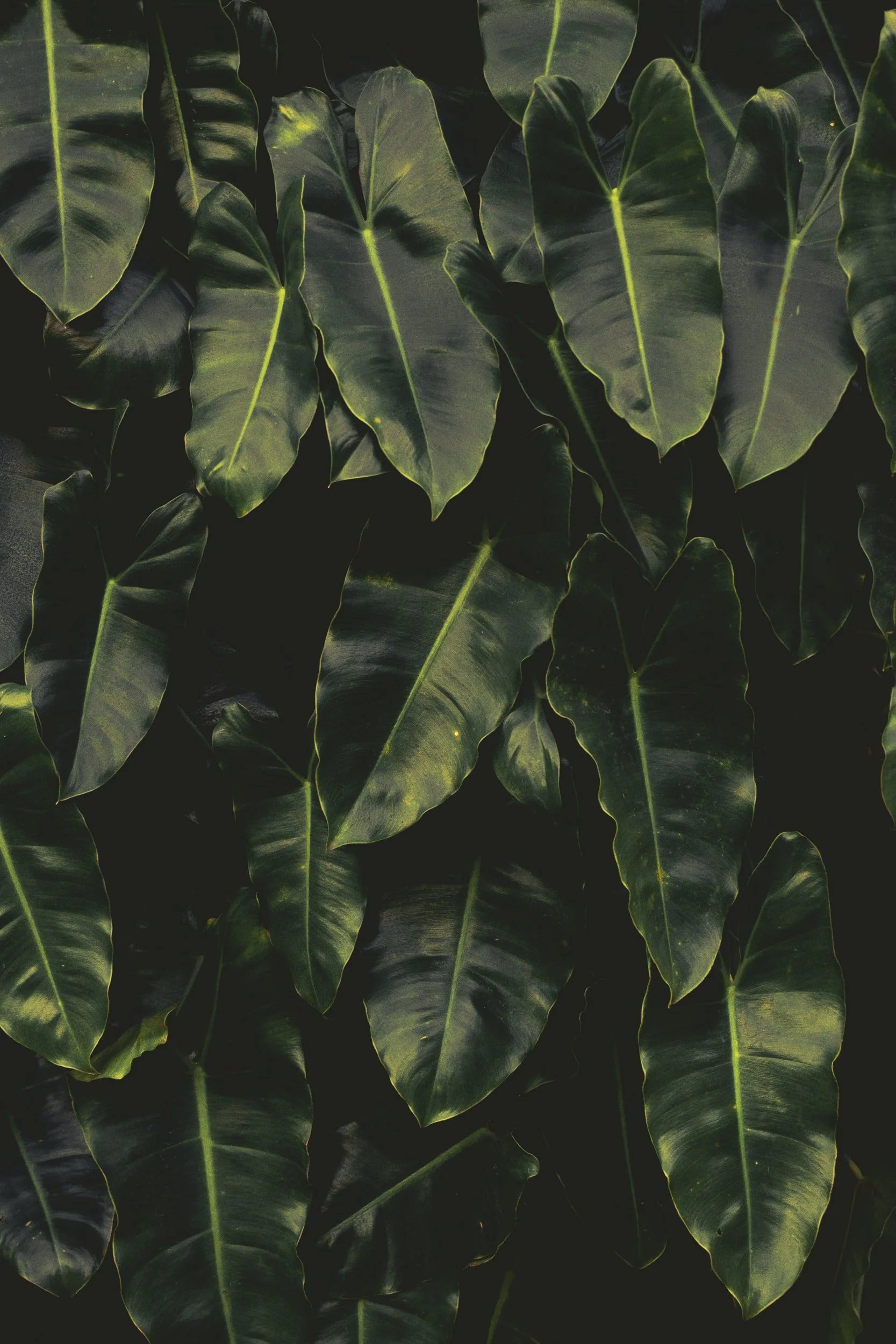
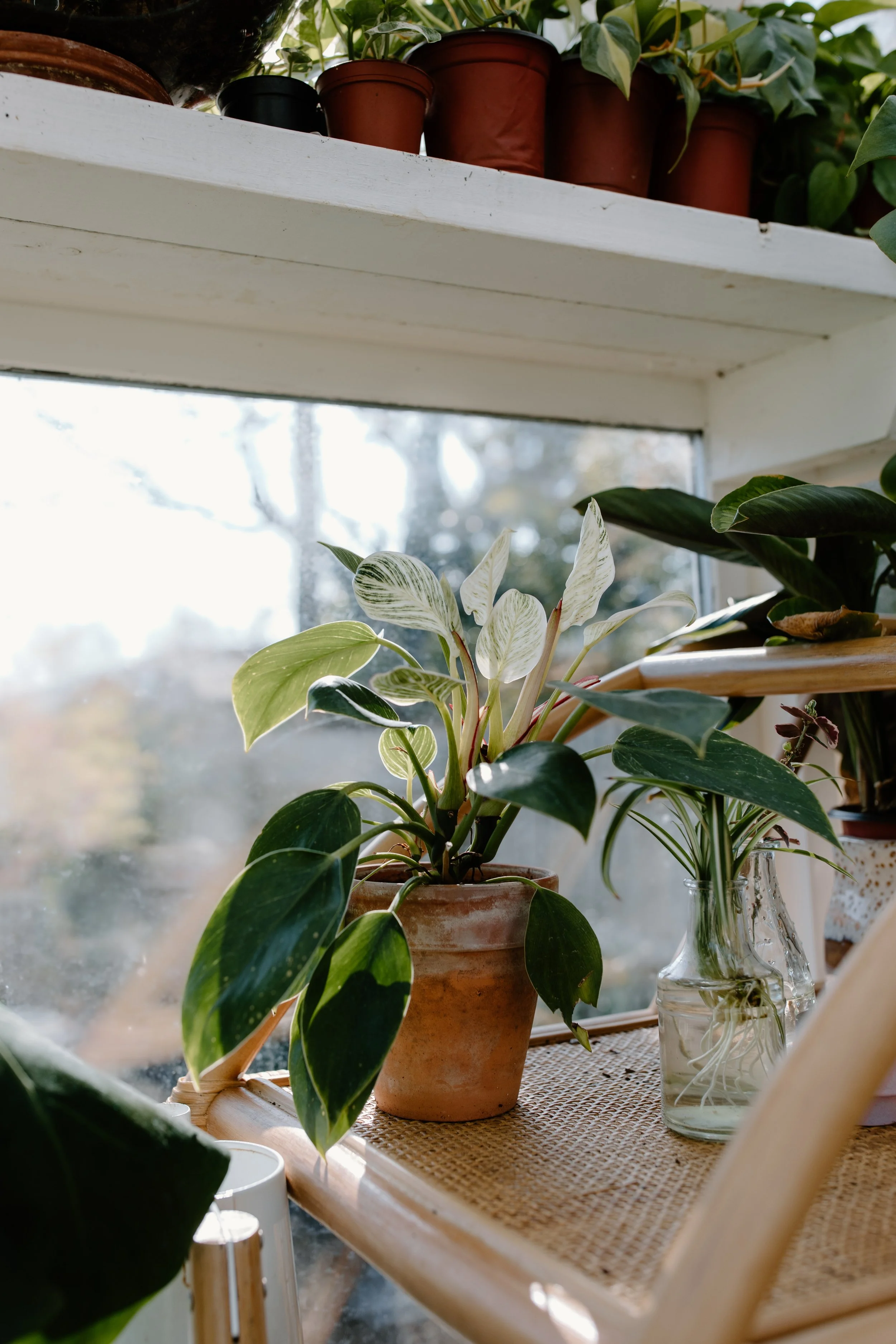
There are hundreds of species of Philodendrons, native to Central and South America. Philodendrons have two growth patterns: vining/climbing and upright/self-heading.
Light: Medium to bright, indirect light
Water: Moderate. Water when the top 1-2” of soil dry out. Brighter light will require more watering; dimmer conditions will require less.
Humidity: Normal room humidity is fine, but in dryer climates or interiors, additional humidity may help maintain your plants’ optimal health.
Soil: Philodendrons like a rich potting soil with good drainage. Amending with coco choir, orchid bark, perlite, or charcoal will help provide adequate drainage and aeration.
Nutrients: Feed monthly with liquid houseplant fertilizer in the spring and summer. During the fall and winter back off to feeding every six to eight weeks.
Pests/Diseases: Philodendrons are susceptible to mealybugs, scale, and spider mites. Check routinely and treat with horticultural oil or insecticidal soap.
Toxicity: Philodendrons contain high levels of calcium oxalate. They are considered toxic to humans and animals if ingested.
Note: Self-heading/upright species of philodendrons often have aerial roots that grow toward the ground to provide additional support more so than to absorb moisture or nutrients.