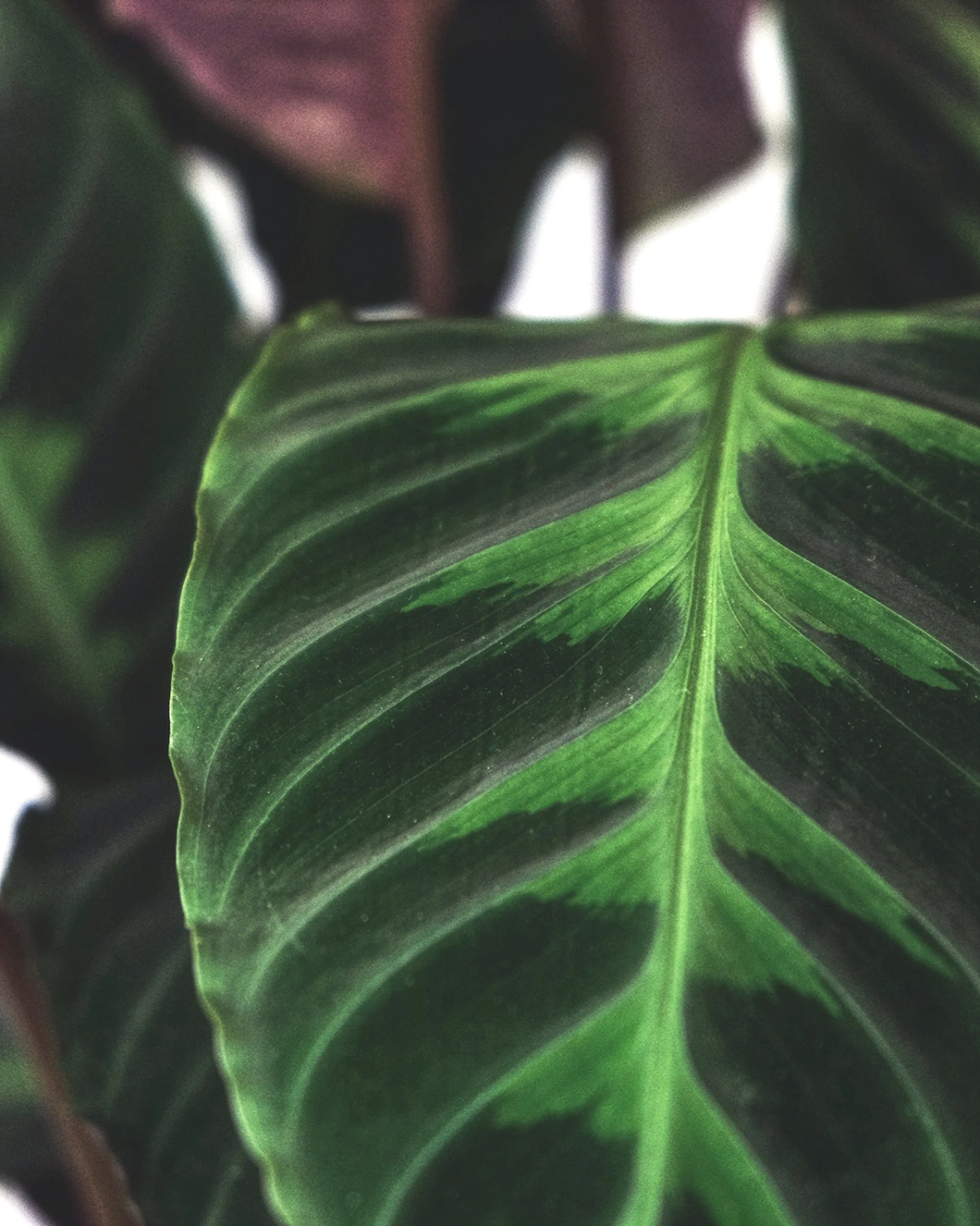
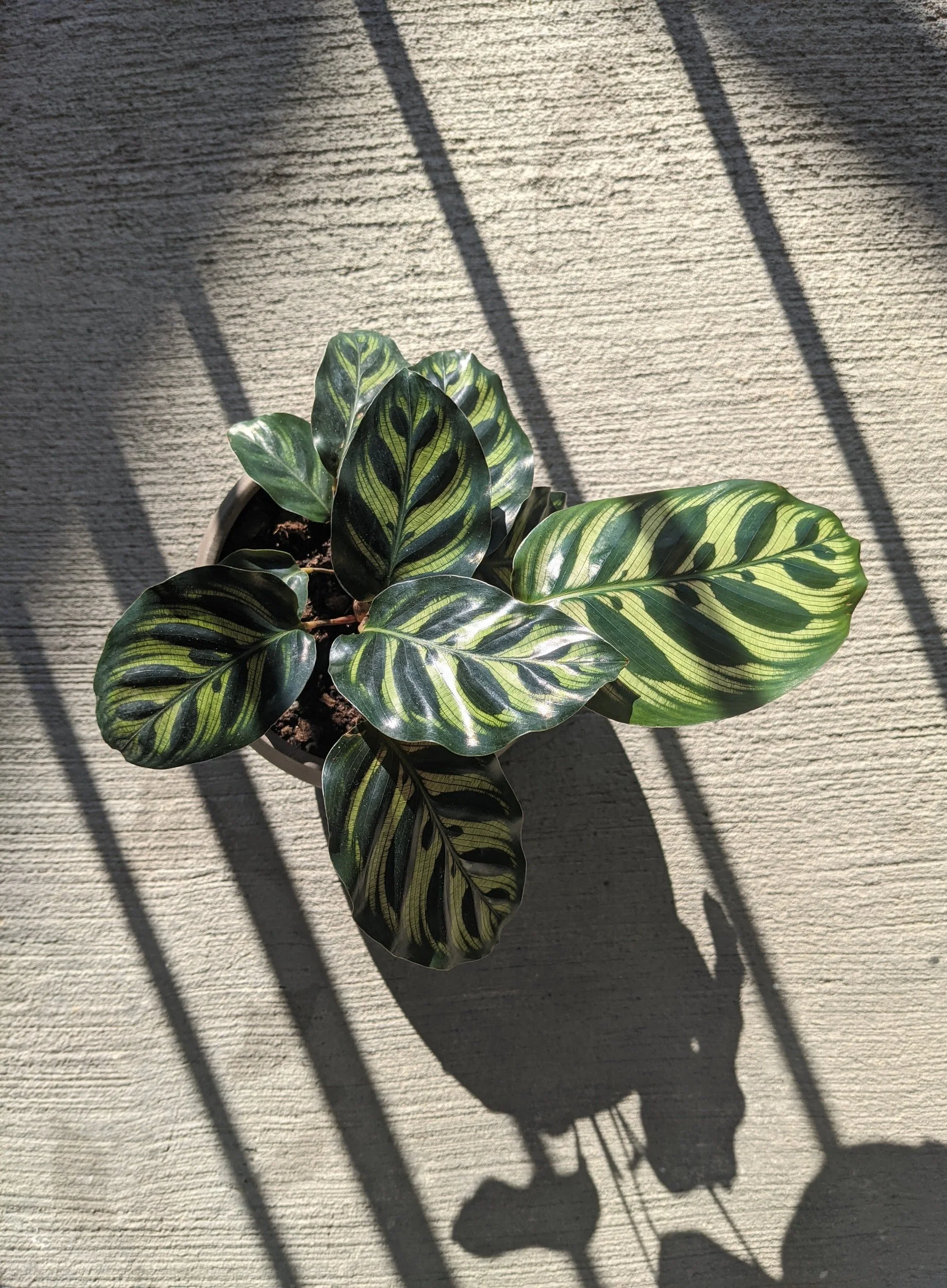
Calathea is one of the genuses of the Marantaceae family, aka “prayer plants.” They are native to the tropical regions of central and South America. The plants move their leaves up and down to maximize light absorption by changing the water pressure in the petiole from the base of the plant.
Light: Calathea can tolerate low to bright, indirect light. The leaves will scorch, so best to avoid direct sunlight.
Water: Calathea prefer to maintain consistently moist, but not soggy soil. Water thoroughly when the top 2” of soil dries out. They can be sensitive to salts in tap water, and will maintain optimal leaf health being watered with distilled water, or with water that has sat out for 24 hours.
Humidity: Calathea are native to tropical rainforests, and prefer higher humidity. Clumping your marantaceae together helps to maintain air moisture, as does placing them on pebble trays or near a humidifier.
Soil: Calathea do well in moist, but not soggy soil. A mix of potting soil, orchid bark, perlite, and charcoal will work well to maintain optimal moisture.
Nutrients: Not heavy feeders, Calathea will appreciate monthly feeding of standard liquid plant fertilzer during periods of active growth.
Pests/Diseases: Calathea can be prone to spider mites, so check frequently and avoid allowing the soil to dry out. They are also sensitive to root rot and botrytis, and care should be taken to avoid overwatering.
Toxicity: Calathea are generally considered non-toxic to pets and humans.
Notes: Due to the specific moisture, humidity, and soil conditions necessary for optimal health, we do not consider most Calathea to be a beginner level plant. We generally recommend new plant owners start with something lower maintenance, and working their way up with experience.