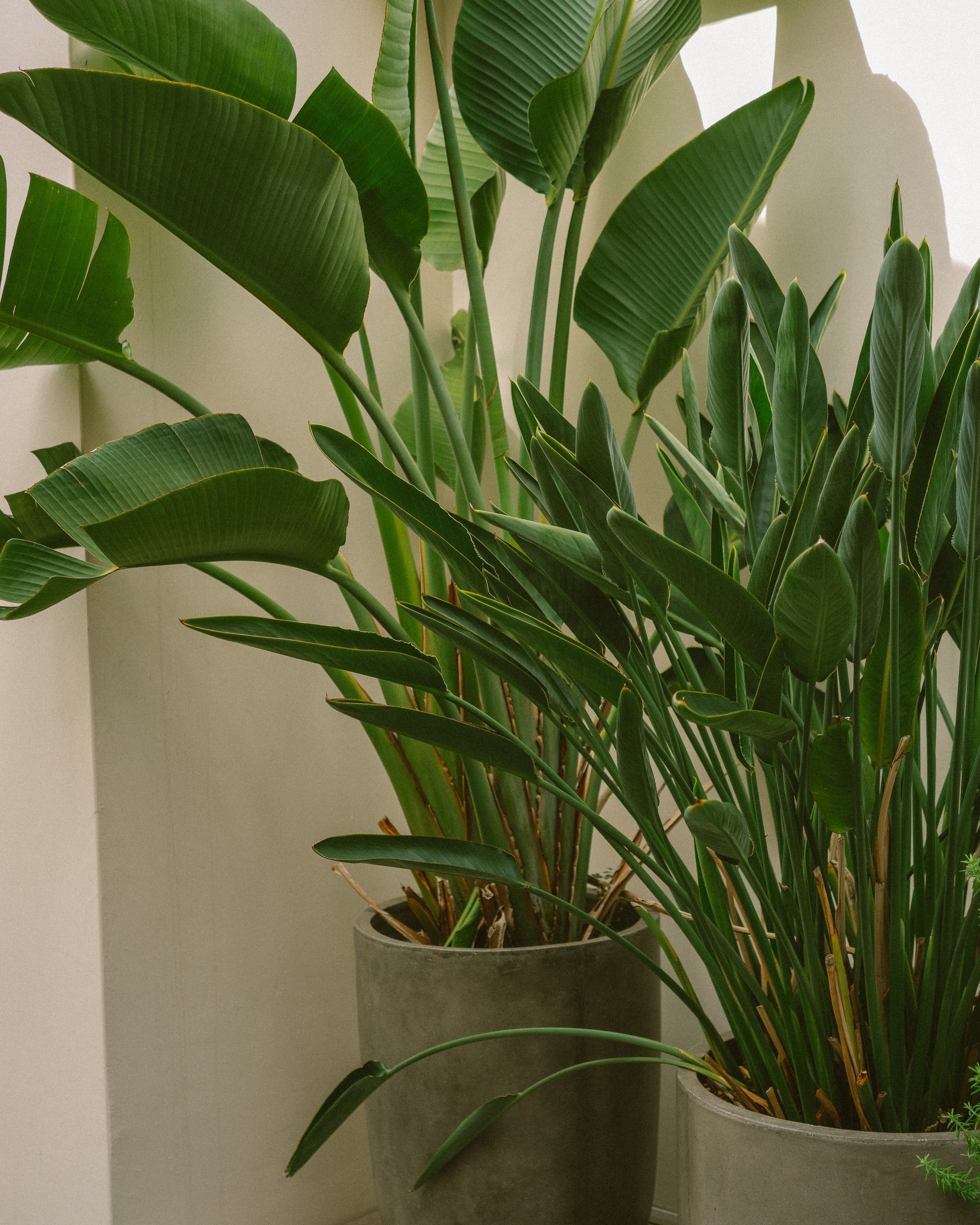
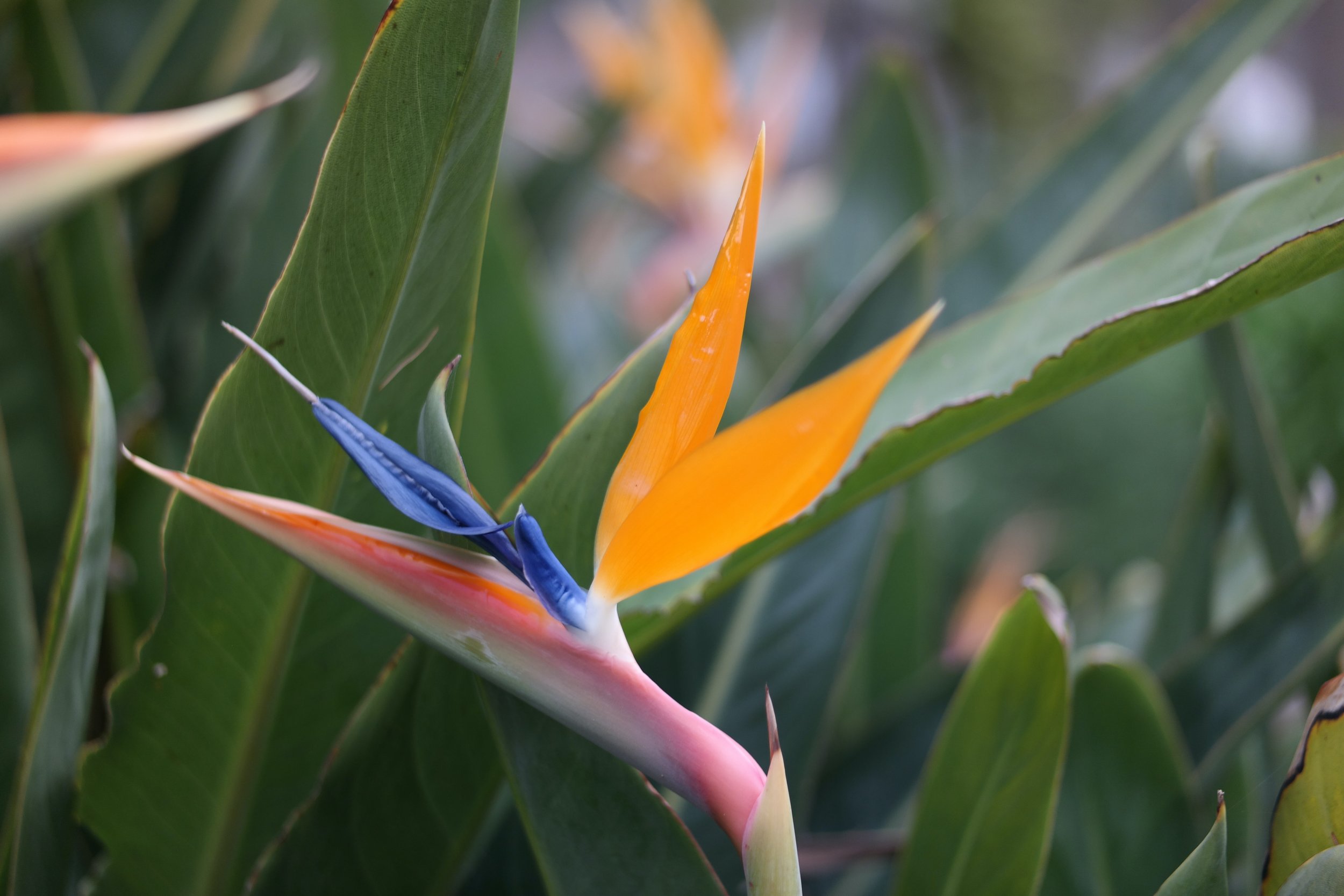
Strelitzia reginae is the official name of this tropical plant, native to South Africa. Closely related to the banana tree, this plant is named for its flowers, which resemble tropical birds. Typically the variety grown indoors has white flowers, and landscape varieties often have orange flowers with less showy foliage.
Light: Bright, indirect light to full sun
Water: Moderate. Allow your Bird of Paradise to dry out in between waterings. Water more frequently in higher light conditions, less in lower. Bird of Paradise are sensitive to the salts and chemicals in tap water, so consider using distilled water or letting your tap water sit out overnight.
Humidity: Normal room humidity is fine, but adding a little extra with plant grouping, pebble trays, or a humidifier will minimize leaf splitting and assist with new leaves unfurling.
Soil: Well draining potting mix with added perlite or aeration stones is best.
Nutrients: bird of paradise are hungry growers. Fertilize with liquid fertilizer once a month during the Spring and Summer, and give it a break during the winter months.
Pests/Disease: Prone to mealybugs and spider mites, so check regularly and wipe down the leaves often.
Toxicity: The leaves are mildly toxic to humans and pets; the flowers and seeds are considered poisonous.
Notes: Splits in the large leaves are normal, an evolutionary trait that allows the light to reach the lower leaves in the forest as well as reduce wind drag. In the case of excessive leaf-splitting, assess humidity and watering to resolve. It is unlikely that a Bird of Paradise kept indoors will receive enough light to bloom. Wipe down the leaves on a regular basis to aid with light absorption and to control pests.