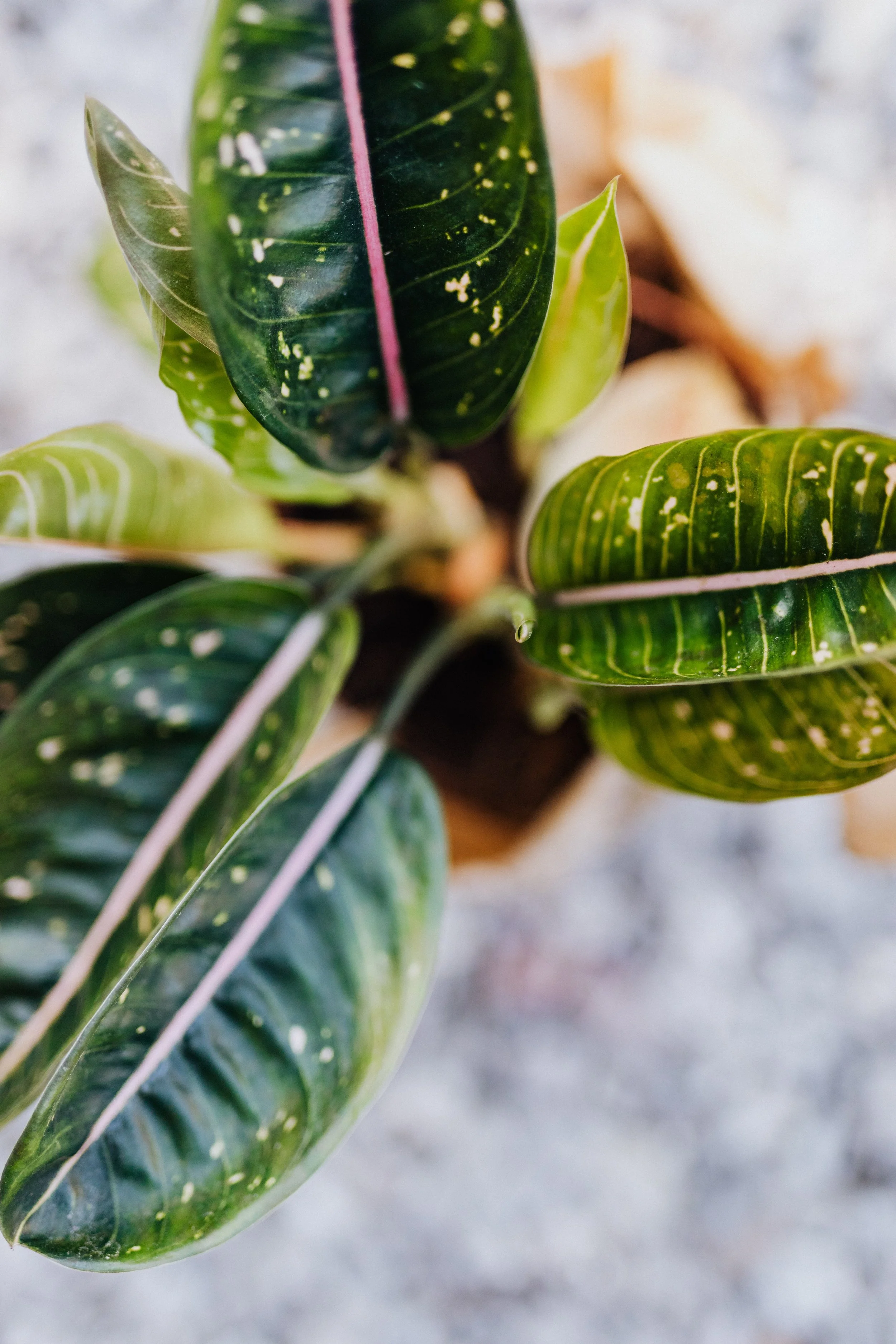
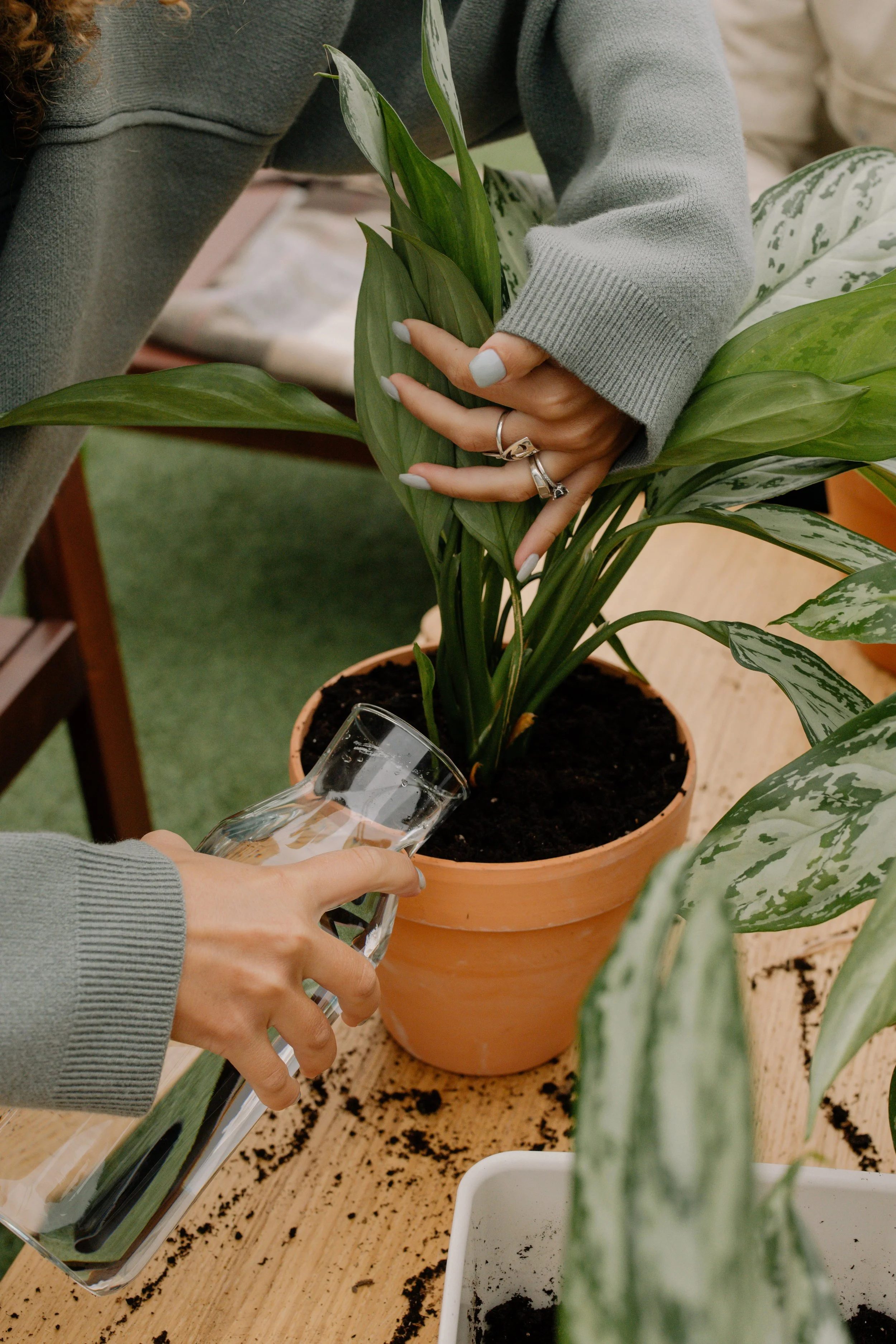
Light: bright, indirect light is best, but many varieties do fine in lower light conditions.
Water: Moderate, adjust to lighting conditions. If in a brighter location, water when the top half of the soil dries out. In lower light, allow soil to dry out almost completely to avoid root rot.
Humidity: Moderate to high humidity. Place in a bathroom/kitchen, or on a pebble tray or near a humidifier to make sure it has enough humidity.
Soil: Aglaonemas aren’t too particular about their soil, though add extra perlite if the soil is remaining too damp after watering.
Nutrients: Use a slow release fertilizer twice a year: at the beginning of the growing season and at the end.
Pests/Disease: Not incredibly susceptible to pests, though check routinely with your other plants to be safe. Most issues with Aglaonemas are a result of overwatering/root rot.
Toxicity: Aglaonemas contain oxalates that irritate the mouth and digestive tract, so be mindful around pets and children. the roots can cause skin irritation, so please wear gloves when repotting.